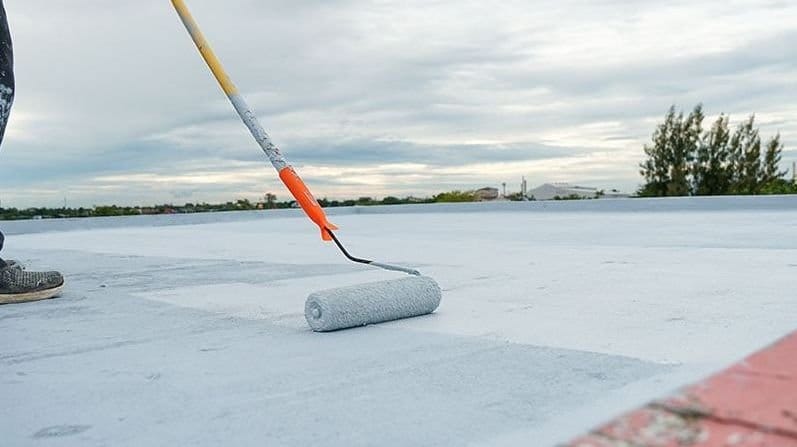
Elastomeric Roof Coatings: Why Flexibility Matters More Than You Think
By Business in Sacramento CountyFrom a distance, a commercial roof can look almost perfectly still—a broad, quiet plane suspended above the activity of the building below. Up close, the reality is more dynamic. Sunlight warms the surface. Evening temperatures fall. Materials expand and contract. Equipment vibrates. Flashing transitions between planes, penetrations interrupt the roof field, and years of weather gradually test every detail.
That movement is precisely why Elastomeric Roof Coatings deserve a more sophisticated conversation than the usual promise of “covering” an aging roof. Elastomeric materials are formulated to create a flexible, membrane-like coating capable of elongating and recovering within the performance characteristics of the specific product. On a suitable commercial roof, that flexibility can become an important part of a broader restoration strategy.
But flexibility should never be confused with magic. An elastomeric coating cannot transform deteriorated roofing materials into sound ones, correct every drainage problem, or erase moisture-related conditions hidden within an unsuitable assembly. Its performance depends on something far less glamorous but far more important: the condition of the roof beneath it.
The interesting question, then, isn’t simply whether a coating stretches. It is how that material behaves as part of a complete roofing system—across changing temperatures, complicated details, environmental exposure, and years of building operation.
“A commercial roof is never truly still. The best restoration strategies are designed with that movement in mind.”
The term elastomeric should not be treated as a universal performance specification. Individual products differ in chemistry, elongation, tensile properties, application requirements, approved substrates, and finished system design.
Flexibility Is the Performance Feature You Don’t See
The most visually impressive moment in a coating project usually comes at the end. A roof that once looked weathered and inconsistent becomes clean and continuous. Yet the property that makes an elastomeric system particularly interesting is largely invisible once installation is complete: its ability to accommodate movement within its designed limits.
Commercial roofs experience thermal cycling as environmental conditions change. Roofing materials respond to heat and cooling, while transitions between different materials and building components introduce additional complexity. The roof field itself may be expansive, but some of its most demanding locations occupy only a fraction of that area—seams, flashing, equipment curbs, penetrations, walls, and perimeter conditions.
Elongation is one technical property used to describe how much a coating material can stretch relative to its original dimension under specified test conditions. Tensile strength addresses another part of the performance picture: the material’s resistance to being pulled apart. Both can be useful when reviewing coating data, but neither should be interpreted in isolation.
A coating with an impressive elongation figure still needs appropriate adhesion. It still needs the specified thickness. It still needs compatible materials beneath it. And the roof details still need to be repaired, prepared, reinforced, primed, or otherwise treated according to the selected system.
Flexibility matters because roofs move. But the number describing that flexibility only becomes meaningful when the complete system is designed and installed to work with the roof beneath it.
This is particularly important around transitions. A coating across an open roof field may encounter relatively straightforward geometry. Around a penetration or curb, however, the system must move through changes in plane and interface with materials that may behave differently under temperature and mechanical stress.
That is why professional restoration cannot be reduced to rolling a flexible coating across square footage. The broad surface may dominate the photographs, but detailing often determines whether the finished system behaves as a coherent whole.
An elastomeric coating is designed to accommodate movement within its tested and specified capabilities. It should not be expected to bridge major structural movement, compensate for an unstable substrate, or replace repairs that the existing roof actually requires.
“The most important movement in a roof coating may be measured in a laboratory, but its real test happens around the ordinary details of an operating building.”
Not Every Elastomeric Coating Behaves the Same Way
One of the easiest mistakes in commercial roofing is to turn a useful category into a universal product description. Elastomeric tells you something important about a coating’s ability to deform and recover, but it does not tell you everything about its chemistry or how it should be used.
Acrylic coatings are commonly associated with reflective commercial roof applications and can offer elastomeric characteristics within their specified formulations. Silicone coatings bring a different chemistry and are frequently considered where resistance to UV and water exposure is important. Polyurethane systems can offer mechanical and abrasion characteristics that make them relevant to other project conditions.
Even within those categories, formulations vary. Two products described using the same general chemistry may have different approved substrates, solids content, coverage rates, finished thickness requirements, elongation, tensile properties, application windows, cure times, and other characteristics.
In other words, the product label is the beginning of the specification conversation, not the end of it.
Elongation • Tensile strength • Solids content • Specified coverage rate • Recommended system thickness • Approved substrates • Primer requirements • Application temperature range • Cure and recoat requirements • Solar reflectance and thermal emittance where relevant
The most useful specification therefore begins with the building. What is the existing roofing material? How has it weathered? Are there recurring repairs? What happens around drains and equipment? Is rooftop traffic significant? Are there conditions that suggest moisture investigation is necessary? What does the manufacturer require for that substrate?
Only after those questions are understood does it make sense to compare coating characteristics. Otherwise, the selection process becomes backward: choosing a product because one number looks impressive and then hoping the roof happens to suit it.
Don’t confuse flexible with indestructible. Elastomeric performance still depends on substrate condition, compatibility, preparation, detailing, specified thickness, installation conditions, and ongoing roof maintenance.
The better approach is quieter and more disciplined: understand the roof first, then choose the material whose documented properties fit what that roof actually requires.
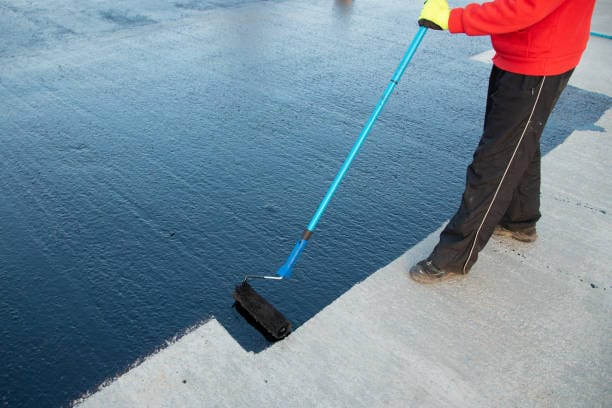
Energy Efficiency Begins at the Surface—but Doesn’t End There
The bright finish of many commercial coating systems has become one of the most recognizable images in modern roof restoration. Against mechanical equipment, vents, and perimeter walls, a reflective surface can make an older roof appear almost architectural in its simplicity. Yet its more meaningful characteristic is not visual. It is the way the surface interacts with solar energy.
This is where Energy-Efficient Roof Coatings require careful language. Solar reflectance describes the fraction of incoming solar energy that a surface reflects rather than absorbs. Thermal emittance describes the surface’s ability to release absorbed heat through thermal radiation. Both can be measured, and the values for a specific coating should come from relevant product testing and documentation.
A highly reflective coating can therefore change the thermal behavior of the roof surface. What it cannot do is dictate the energy performance of the entire building by itself. Insulation levels, HVAC efficiency, climate, occupancy, internal loads, operating schedules, building geometry, and roof area all influence how changes at the roof ultimately affect energy consumption.
A reflective coating can change the thermal behavior of a roof surface. It cannot, by itself, define the energy performance of an entire commercial building.
This distinction matters because exaggerated energy claims can distract from the coating’s actual measurable characteristics. Rather than assuming a fixed percentage of savings, property owners can evaluate tested reflectance and emittance values, consider the building’s thermal configuration, and determine how the roof fits within a broader energy strategy.
HIGHLIGHT: REFLECTIVITY IS MEASURABLE
Solar reflectance and thermal emittance can be compared using product performance data. Utility savings, however, are building-specific outcomes and should not be inferred from reflectivity alone.
“The smartest energy conversation begins with measured roof performance and ends with the building as a whole.”
There is an elegant logic to combining elastomeric and reflective properties when the project calls for both. One characteristic addresses the coating’s ability to accommodate movement within its designed limits; another addresses the way the surface interacts with solar radiation. Neither eliminates the need for sound waterproofing details, proper drainage, compatible substrates, or appropriate installation.
Performance is strongest when each property is allowed to do precisely the job it was designed to do.
A Better Coating Starts with a Better Roof Assessment
For all the sophistication of modern coating chemistry, the most important instrument in a restoration project may still be the initial roof assessment. Before discussing color, reflectance, elongation, or finished appearance, someone needs to understand what already exists.
The condition of the roof field matters, but so do the details that interrupt it. Flashing, penetrations, equipment curbs, drains, scuppers, perimeter transitions, seams, and previous repairs deserve attention. Where conditions suggest moisture within the assembly, appropriate investigation may be necessary before restoration eligibility can be established.
If the roof remains suitable, the restoration process can proceed methodically. Cleaning and surface preparation come first. Identified deficiencies are corrected. Critical details receive the treatment required by the specified system. Primer or reinforcement is incorporated where necessary. Only then does the elastomeric coating become the defining surface.
Application deserves equal discipline. Manufacturer requirements for coverage, thickness, environmental conditions, curing, and substrate preparation are not minor technicalities. They are part of the system design. A roof that appears perfectly uniform from the parking lot may still tell you very little about whether those requirements were satisfied.
EDITOR’S NOTE:
The best coating proposal should explain more than what will be applied. It should make clear what will be inspected, repaired, prepared, detailed, and documented before the finished surface is considered complete.
There are also roofs for which coating is simply not the right answer. Widespread deterioration, an unsuitable substrate, extensive moisture-related conditions, significant deck or structural concerns, or broader changes required within the roof assembly can shift the project toward more comprehensive work. Major drainage deficiencies may also require solutions beyond the capabilities of a surface coating.
Recognizing those limits does not diminish elastomeric coatings. It makes their proper use more credible.
The best elastomeric coating project is not the one that creates the brightest roof in the neighborhood. It is the one in which material, movement, preparation, and building conditions have been considered as a single system.
After installation, the roof returns to ordinary commercial life. Technicians service HVAC equipment. Weather carries debris toward drainage points. New penetrations may be introduced. Traffic follows familiar routes across the roof. The surface continues to heat, cool, expand, contract, and weather.
That is why maintenance belongs in the same conversation as material selection. Periodic inspections can help identify changes around penetrations, flashing, drains, repaired areas, and traffic zones. Documentation from the original coating project provides a baseline against which those changes can be evaluated.
A coating’s flexibility may be one of its defining technical properties, but a successful restoration strategy requires another kind of flexibility as well—the willingness to respond as the building changes.
Commercial roofs are dynamic systems. The materials move, the weather changes, equipment evolves, and maintenance histories grow longer. Elastomeric coatings make sense not because they promise to stop those realities, but because properly selected systems are designed with movement and exposure in mind.
That is the more compelling way to think about them: not as a layer intended to make an old roof look new, but as a carefully specified component in a larger strategy of preservation, protection, and performance.